Tutorials
In-depth technical tutorials, guides, and infrastructure best practices.

Single-Region vs Multi-Region Dedicated Servers: Which One Do You Actually Need?
Use one region for simple apps with local users. Use multiple regions only when you need lower global latency or backup during a regional outage.

Hosting Multiple Lightweight Sites on a Linux VPS
A small Linux VPS can host many lightweight sites with Nginx, Docker, and HTTPS. Monitor CPU, RAM, and disk space so one site does not affect the others.

Plan a SaaS Domain Structure: App, Docs, API & Status
Keep your main site on the root domain, then use subdomains for your app, docs, API, and status page. Host the status page separately so it stays online during outages.

When to Choose a Russia Dedicated Server for CIS Traffic and Regional Reach
Choose a Russian server when most users are in Russia or the CIS and need low latency. It can also help meet local data rules for Russian user data.

How to Size a GPU Server for RAG: Embeddings, Vector DB & Inference
Size the GPU for your LLM and its VRAM needs, then add enough RAM and fast NVMe storage for the vector database. Leave extra GPU memory for context and more users.

A Complete Guide to Domain Privacy and WHOIS Records
Domain privacy hides personal details in public registration records. WHOIS is moving to RDAP, which shows only the data allowed by the registrar and registry.
When You Should Stop Relying on Managed AI APIs and Move to GPU Hosting
Move to GPU hosting when AI API costs, privacy needs, or traffic volume keep growing. A hybrid setup lets you self-host steady workloads and keep APIs for advanced models.

Choose a France Dedicated Server for Southern Europe & Francophone Markets
Choose a France server when your users are in France, Southern Europe, or French-speaking markets. It gives faster access and strong regional connectivity.

Everything You Need to Know Before Running a 70B Model on One Server
A 70B model needs about 140 GB VRAM at full precision or 40–48 GB with 4-bit quantization. Leave extra VRAM for context, users, and faster responses.

Best Linux VPS for Coolify: Self-Hosting Apps Without Kubernetes
Coolify runs well on a Linux VPS with Docker, without Kubernetes. Start with 2 cores, 2 GB RAM, and 30 GB storage, then scale for your apps and databases.
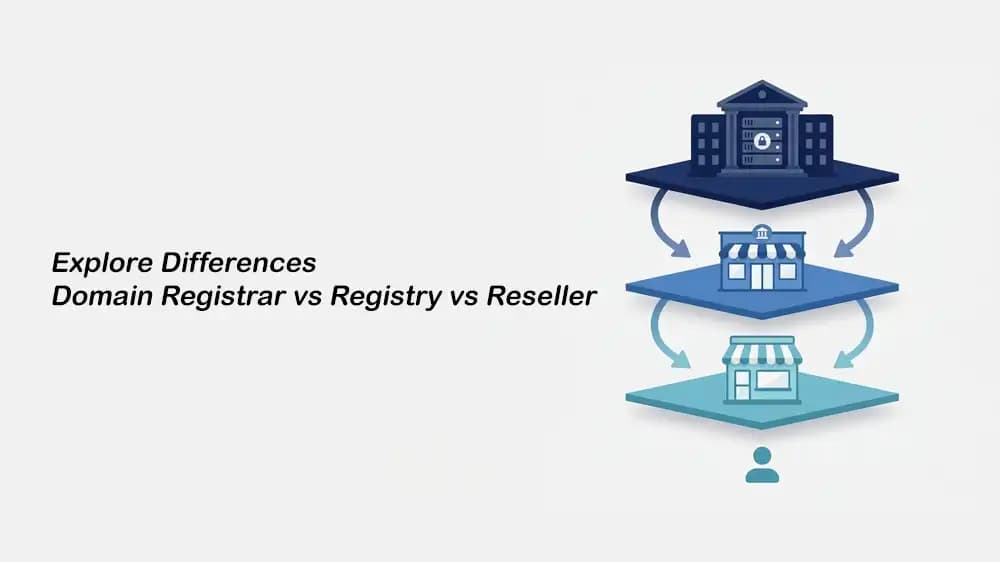
Registrar vs Registry vs Reseller: What’s the Difference?
A registry runs a domain extension, a registrar sells domains directly, and a reseller sells them through a registrar.

How Much RAM, CPU, and NVMe Does an AI Server Need Beyond the GPU?
Beyond the GPU, AI servers need enough CPU cores for data work, RAM for models and caching, and fast NVMe storage for models and datasets. More users and larger models need more of each.